
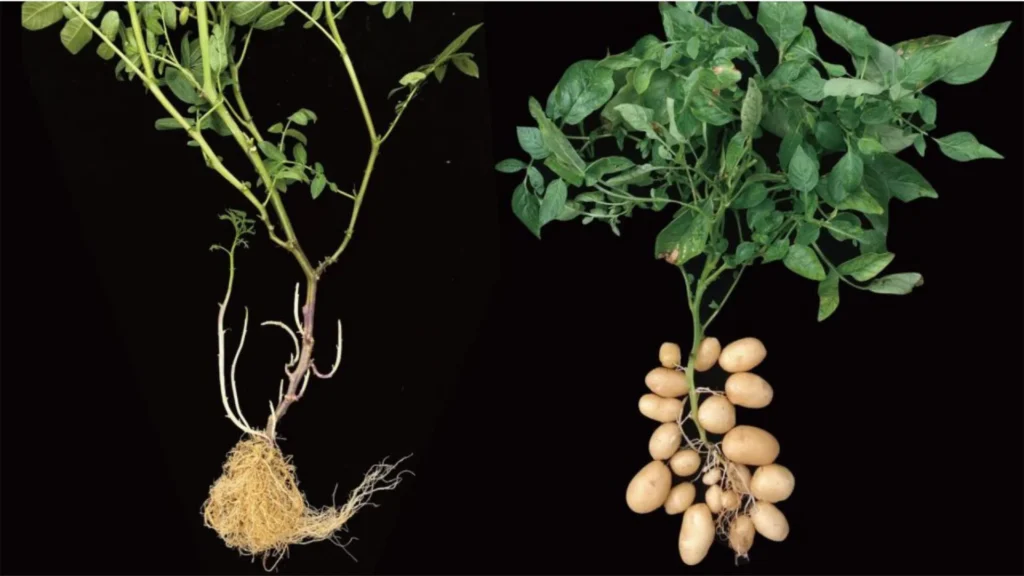
A groundbreaking genomic study has revealed that the humble potato, one of the world’s top food staples, originated from an ancient natural hybrid between a wild tomato plant and a potato-like species in South America about 9 million years ago.
Researchers analyzed 450 cultivated potato genomes and 56 wild relatives, uncovering the potato’s evolutionary origin – a rare interbreeding event that led to the formation of its tuber, the underground nutrient-storing structure we eat.
“This event reshuffled genes and created the ability to form tubers,” said botanist Sandra Knapp of the Natural History Museum, London.
The two parents of the modern Solanum tuberosum:
- A tuber-less ancestor of Etuberosum (Peru)
- A tomato-like plant
This hybridization coincided with the uplift of the Andes, allowing the potato to thrive in cold, dry mountain habitats using tubers for survival, asexual reproduction, and nutrient storage.
Despite being labeled a carb-heavy food, potatoes are nutrient-rich, offering vitamin C, potassium, fiber, and resistant starch, and are naturally gluten-free and low-fat, said senior author Sanwen Huang of the Chinese Academy of Agricultural Sciences.
With over 5,000 potato varieties, the potato is the third most important food crop globally (after rice and wheat), with China as the top producer.
Researchers hope this discovery will:
- Improve potato breeding for climate resilience
- Possibly create a hybrid plant with tomato fruits above ground and potato tubers below
Fun Fact: Potato flowers can produce small green fruits that look like tomatoes, but don’t eat them – they’re toxic!
Here’s a concise and informative summary of the latest developments regarding the hostages in Gaza and humanitarian aid efforts: