
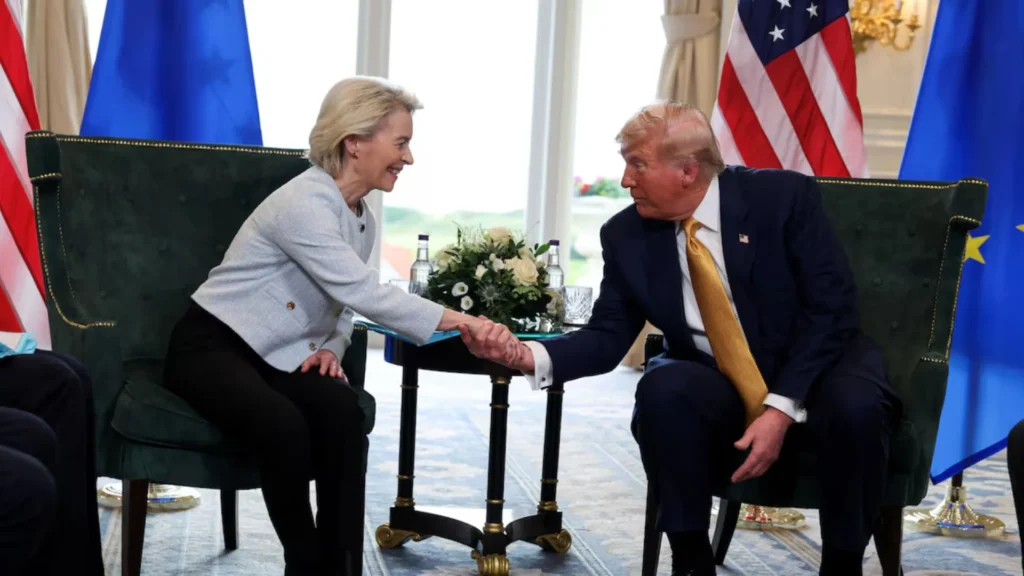
The Deal:
- U.S. and EU strike a framework trade agreement, capping tariffs at 15% on most EU goods.
- The deal averts a looming trade war, avoiding Trump’s earlier threat of 30% tariffs.
- It was finalized after a meeting between President Trump and EU Commission President Ursula von der Leyen in Scotland.
Key Provisions:
- EU to invest $600 billion in the U.S., with massive purchases of energy and military equipment.
- Tariff applies to most goods, including semiconductors and pharmaceuticals.
- Exemptions include:
- Aircraft and aircraft parts
- Certain chemicals
- Generic drugs
- Semiconductor equipment
- Some agricultural goods and critical raw materials
- Aircraft and aircraft parts
Tariff Retentions & Conditions:
- 50% tariffs on steel and aluminum remain in place.
- The U.S. retains the right to raise tariffs if the EU fails to meet investment commitments.
- Spirits and other sectors are still under negotiation.
Reactions & Concerns:
- German Chancellor Friedrich Merz welcomed the deal, saying it protects export-heavy industries.
- EU Parliament officials criticized the deal as imbalanced and potentially harmful to the EU economy.
- Some leaders see it as a political, not comprehensive agreement, risking misinterpretation.
Market Impact:
- Euro rose 0.2% after the deal announcement.
- EU companies like Airbus, Mercedes-Benz, BMW, and Novo Nordisk could benefit if terms hold.
Key Quotes:
- Trump: “Biggest deal ever made,” calling it a victory for U.S. exporters.
- Von der Leyen: “It will bring stability and predictability… the best we could get.”
Broader Trade Context:
- Mirrors recent U.S. deals with Japan, Indonesia, and Vietnam.
- Part of Trump’s broader strategy to restructure global trade and reduce U.S. deficits.
The U.S. had a $235 billion trade deficit with the EU in 2024; the EU counters with U.S. services surplus.